

Fixed-rate lending: the long road to predictable credit
- Barter Research
Content
Explore fixed-rate lending.
Explore fixed-rate, fixed-term lending and borrowing markets on BarterLend.
Open BarterLendThe foreword
Variable-rate lending was the first successful money market primitive in DeFi. The design has performed well since then because it was designed for the DeFi of that time. Relatively thin liquidity, a lack of sophisticated players, passive LPing and deferred matching of supply and borrowing demand — all of that was effectively solved by utilization curves and pool-based design. But the same architecture that made variable rates work in 2020 is exactly what makes them inappropriate now. Rates set by utilization can swing from 3% to 13% in days, with no mechanism to lock in. And the spread between supply and borrow stays embedded by design — the cost of holding idle liquidity for redemptions.
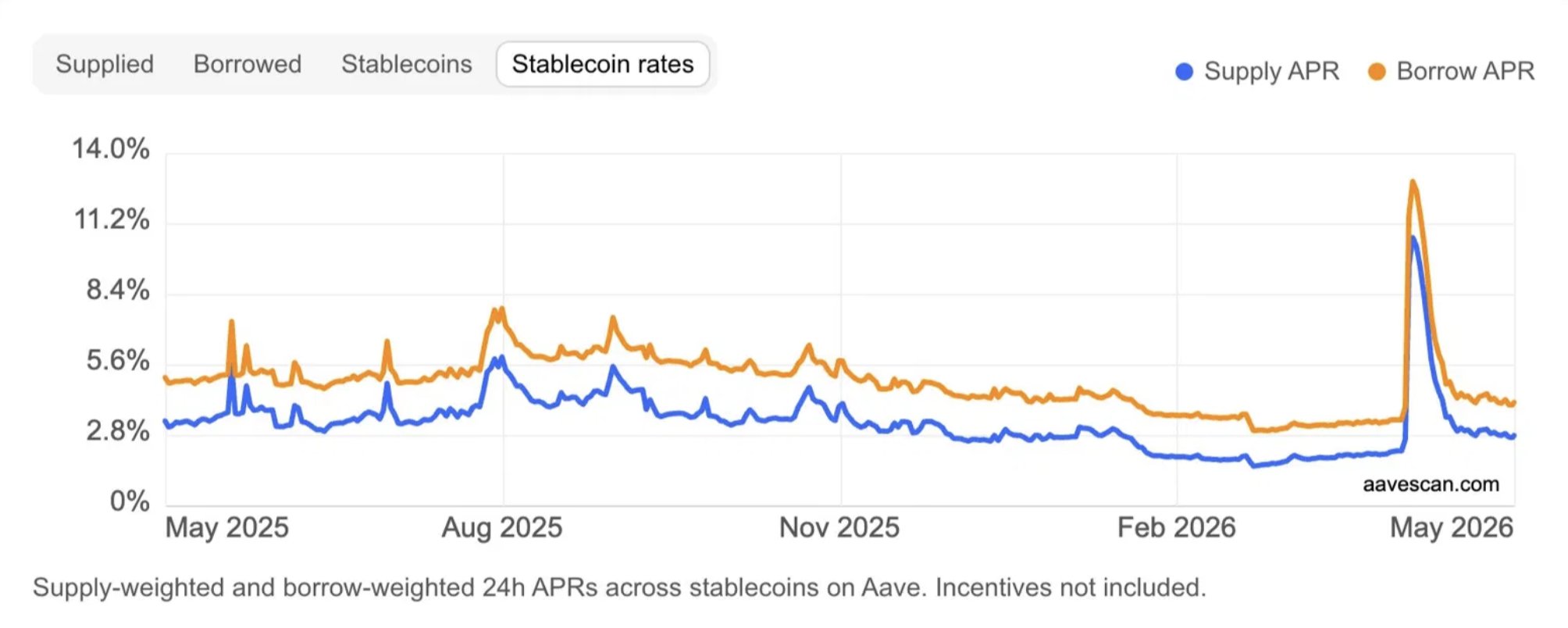
DeFi has changed. Aave crossed $40B TVL and $29B in active borrowings in 2025 — the largest year in its history. Now regular users tend to provide liquidity through vaults, delegating the most complex part to vault curators. We have a lot of professional players at the table: vault curators, asset managers, custodians and market makers. All of them seek more control over their credit lines, not just over isolation, LLTV and oracles — they want to be able to lock interest rates and loan durations.
Barter have been building toward this endgame ourselves. Below, we briefly outline the evolution of DeFi toward fixed-rate lending protocols, from its very beginnings to our vision.
First steps toward a fixed rate
From the beginning, Aave introduced stable-rate loans alongside variable-rate borrowing. Stable-rate borrowing was later deprecated because it added unnecessary complexity to the protocol, creating new attack vectors. But that wasn't the main problem: stable-rate borrowing is simply incompatible with utilization-based lending.
Because Aave's stable-rate loans had no fixed repayment period, borrowers with attractive stable-rate debt could keep that debt outstanding indefinitely as long as their position remained healthy, while suppliers remained exposed to a floating supply rate. This created structural asymmetry: a borrower effectively received a long-lived rate option, while the protocol still needed to maintain a sufficient level of available liquidity by adjusting the interest rate. To protect the pool, Aave relied on a rebalancing mechanism, which meant that the product wasn't a true fixed-rate borrowing, but rather a quasi-fixed-rate product.
Zero-coupon model
The next generation of protocols capped open-ended borrowing by introducing maturity: a date by which the borrower is obliged to repay the debt. That's a common thing for TradFi but was a major breakthrough for DeFi. Protocols such as Yield and Notional brought zero-coupon-style fixed-rate instruments, tokenized loans, maturity-specific markets and AMM-based liquidity into DeFi credit. AMM was a great solution for passive LPs. However, it limits interest rate discovery with a bonding curve, leaving no room for active participants who want to quote explicit bids and offers.
Direct matching of borrowers and lenders
Term Finance took a different path. It introduced fixed-rate lending through double-sided batch auctions with a unified interest rate for all participants. This allowed borrowers and lenders to be matched directly, thereby simultaneously lowering the borrowing rate and increasing the supply rate.
Nevertheless, the auction-based system of matching borrowers and lenders has its own drawbacks and therefore hasn't gained widespread adoption. It creates a delay between an intention to lend or borrow and actual settlement and does not provide continuous rate discovery. But probably the most important thing is that auctions aren't able to handle the secondary market for issued loan notes, meaning that users don't have a native and reliable way to exit early.
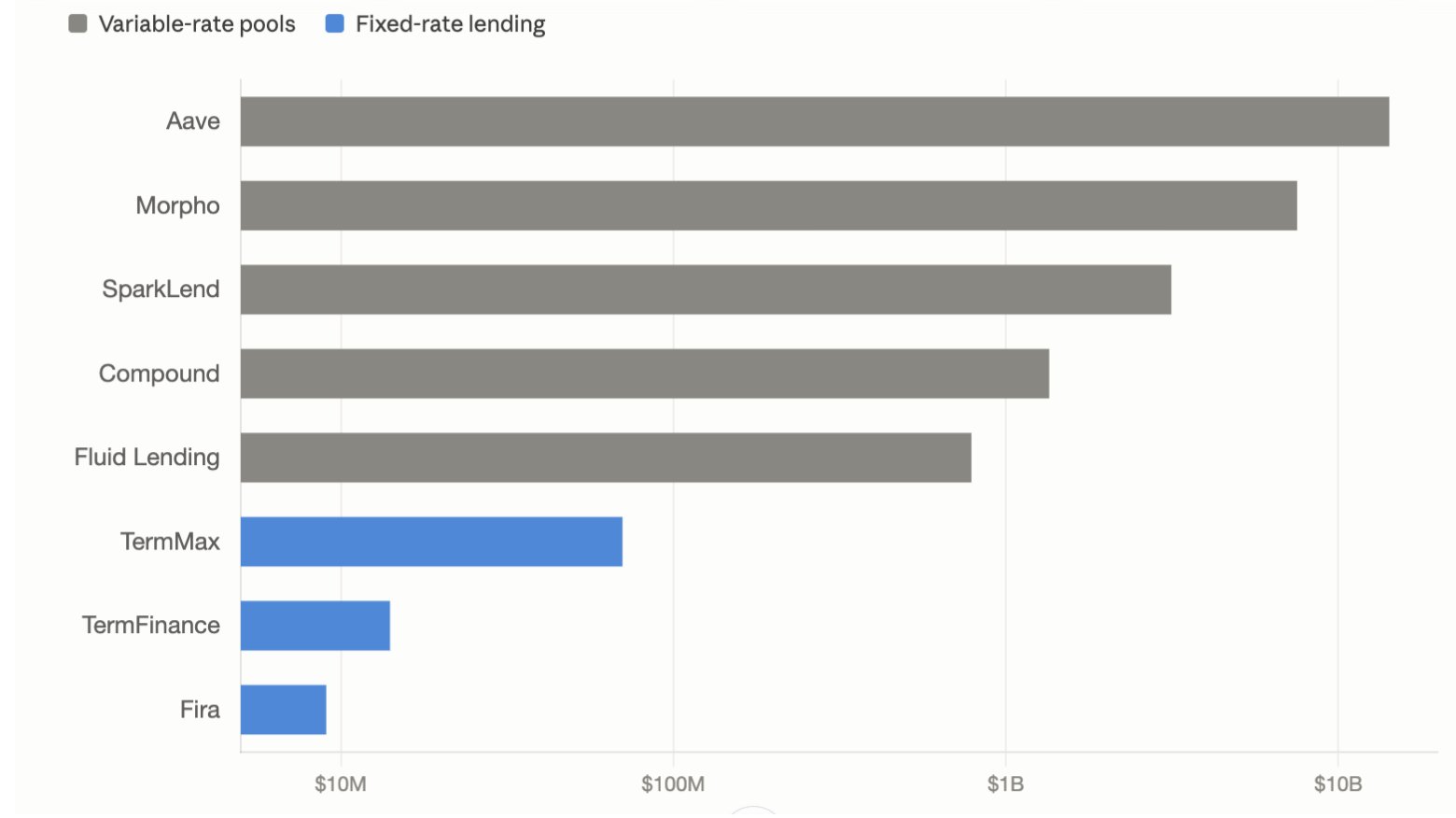
The combined TVL of all fixed-rate lending protocols in DeFi sits below $100 million, while Aave alone holds $40 billion. The category that should be 30–40% of credit infrastructure as it is in TradFi sits at less than 0.5%.
The end-game of fixed-rate lending
By analyzing traditional variable-rate lending, fixed-rate protocols and the overall DeFi ecosystem, Barter formed a clear vision of the next-generation credit layer, which has been brought to life in BarterLend.
BarterLend consists of isolated maturity-based credit markets defined by a collateral/loan pair, LLTV, an oracle and, most importantly, by an interest-rate order book. Borrowers and lenders will be matched peer-to-peer, continuously discovering the interest rate through a fully on-chain order book.
The same liquidity handles both primary debt origination and the secondary market. Users can place limit lend and limit borrow orders, expressing their willingness to lend or borrow at a set rate, execute market lend and market borrow orders, or unwind already matched positions before maturity. All of these will be served by the same order book.
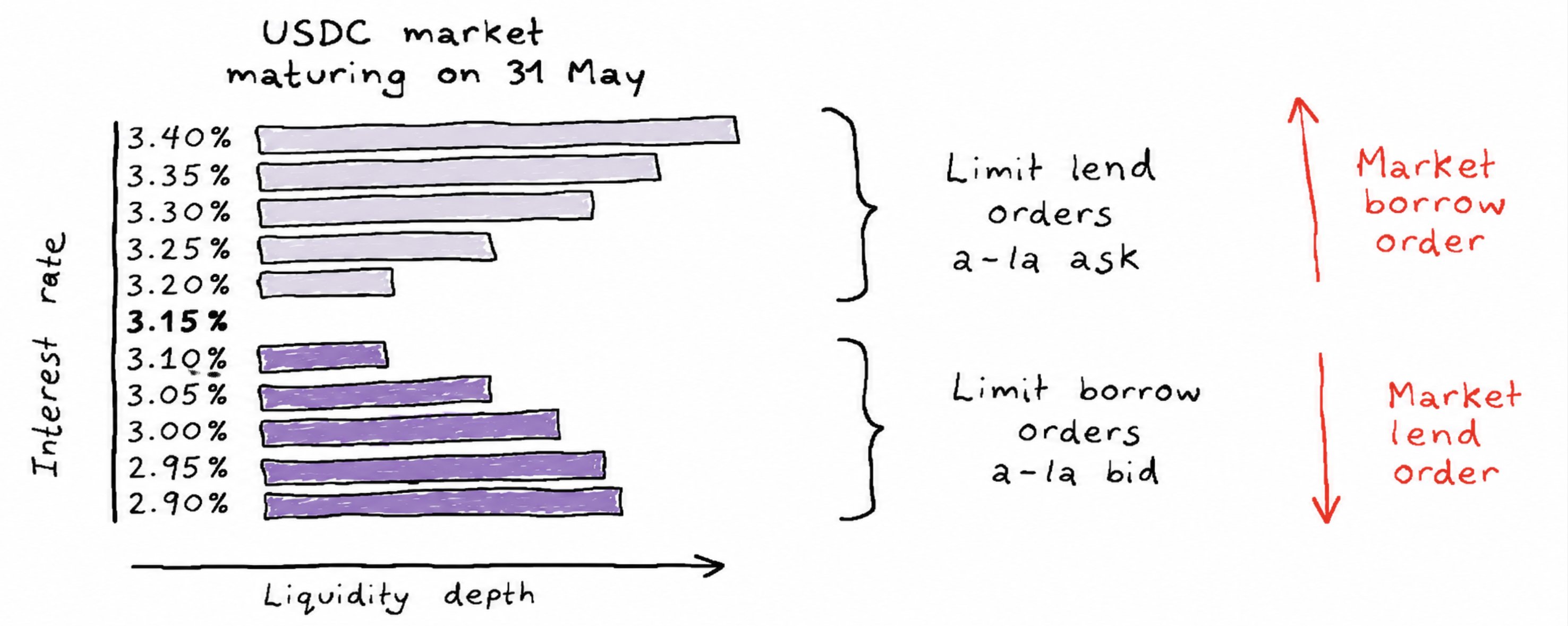
Moreover, resting limit-order liquidity isn't idle. All limit lend orders earn yield on current lending protocols such as Aave, Euler or Morpho until the very moment of matching with a market order. This means users can earn baseline APY while having open limit lend orders.
There's a clear demand for fixed-rate products, and there's no question that fixed-rate lending will be the next major milestone in the development of DeFi. The market is waiting for a protocol that will ensure deep liquidity for both primary and secondary markets, where rates are directly and continuously quoted by participants.
BarterLend is in audit, with beta targeted for Q4. The full design will be revealed soon.