

DeFi Is Addicted to Loops
- Barter Research
Content
DeFi is addicted to loops because looping is the most natural trade in on-chain credit.
For dummies, looping is recursive borrowing. A user deposits collateral, borrows against it, uses the borrowed funds to buy or deposit more collateral, and repeats the cycle. The goal is to increase exposure to an asset or strategy without adding the same amount of new equity. Economically, a loop works when the expected return on the asset is higher than the cost of borrowing. The spread between the two is the trade. Loops create leverage multiplying the spread.
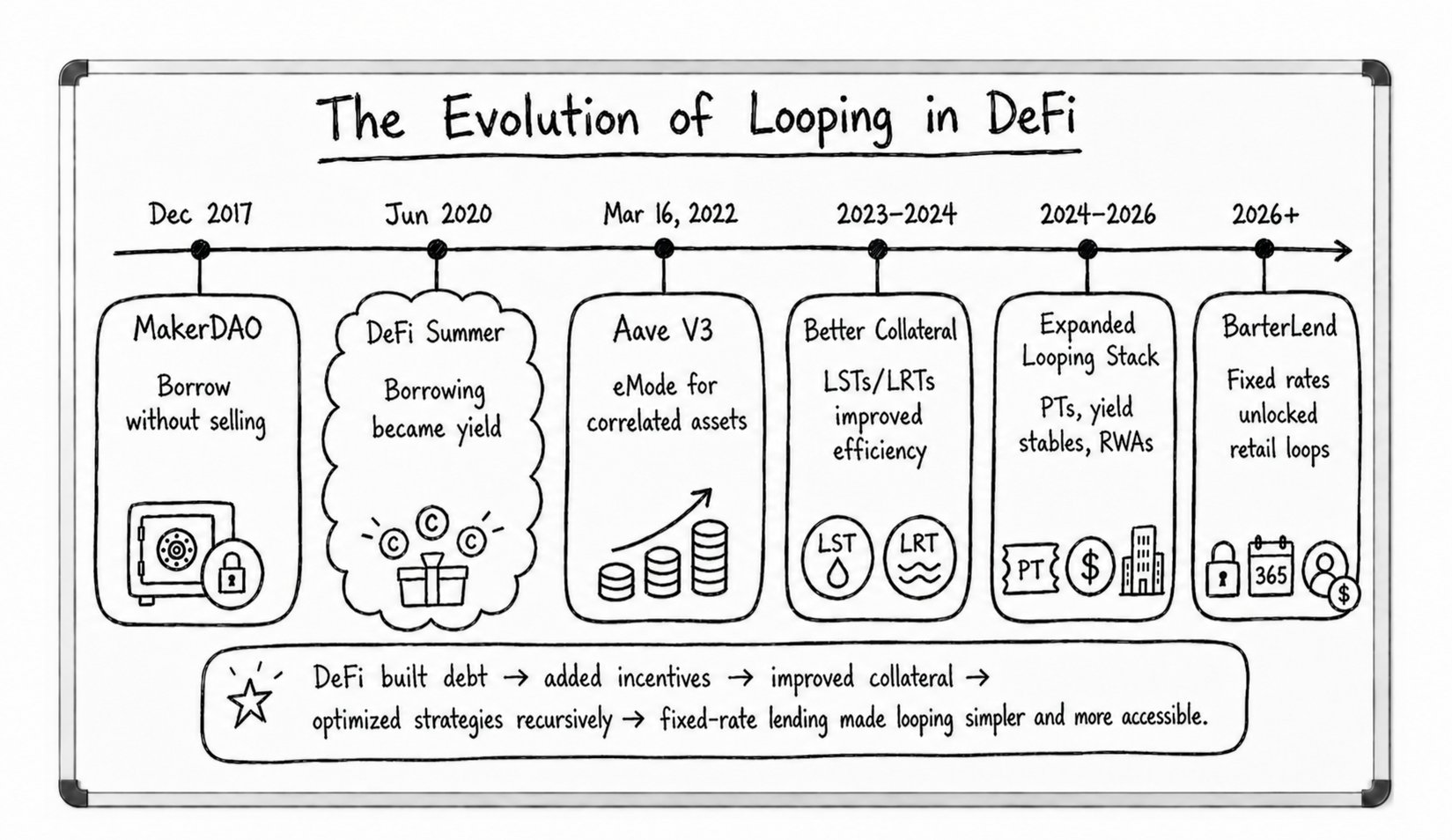
A short history of looping
Looping did not appear out of nowhere. First, DeFi built collateralized debt: by December 2017, MakerDAO's Dai system described collateralized debt positions, letting users borrow against crypto without selling it. Then DeFi Summer changed the incentives — in June 2020, Compound's COMP liquidity mining made borrowing not only a cost, but potentially part of the yield strategy. Then the collateral got better. Aave V3 launched on March 16, 2022 with Efficiency Mode, isolation mode, supply caps and borrow caps; eMode made high-efficiency borrowing possible for correlated assets. From there, LSTs, LRTs, PTs, yield-bearing stables and RWAs made the loop more natural.
How big is looping today?
Looping is no longer just a degen trick. It has become an everyday tool for DeFi strategies. DeFi leverage typically ranged from 1.5x to 2x, while the largest and most risky players consistently used even more leverage. Despite overcollateralization requirements and rising risk, users continue to engage in recursive leverage.
The clearest live proxy is Aave eMode — a borrowing mode tailored for looping. In May 2026, Galaxy analyzed eMode and found $6.3B of outstanding loans, representing 58.8% of Aave V3 loans, against $7.05B of collateral after filters. That's an 89.4% debt/collateral ratio. A large part of DeFi borrowing is already structured around correlated, high-efficiency, loopable exposure.
What looping gives users and markets
Looping gives users three things: more exposure, more capital efficiency, and more sensitivity to spreads. The math is simple. Let E0 be the user's initial equity, A be the total asset exposure after looping, D be the borrowed amount, and L be the loan-to-value ratio (LTV).
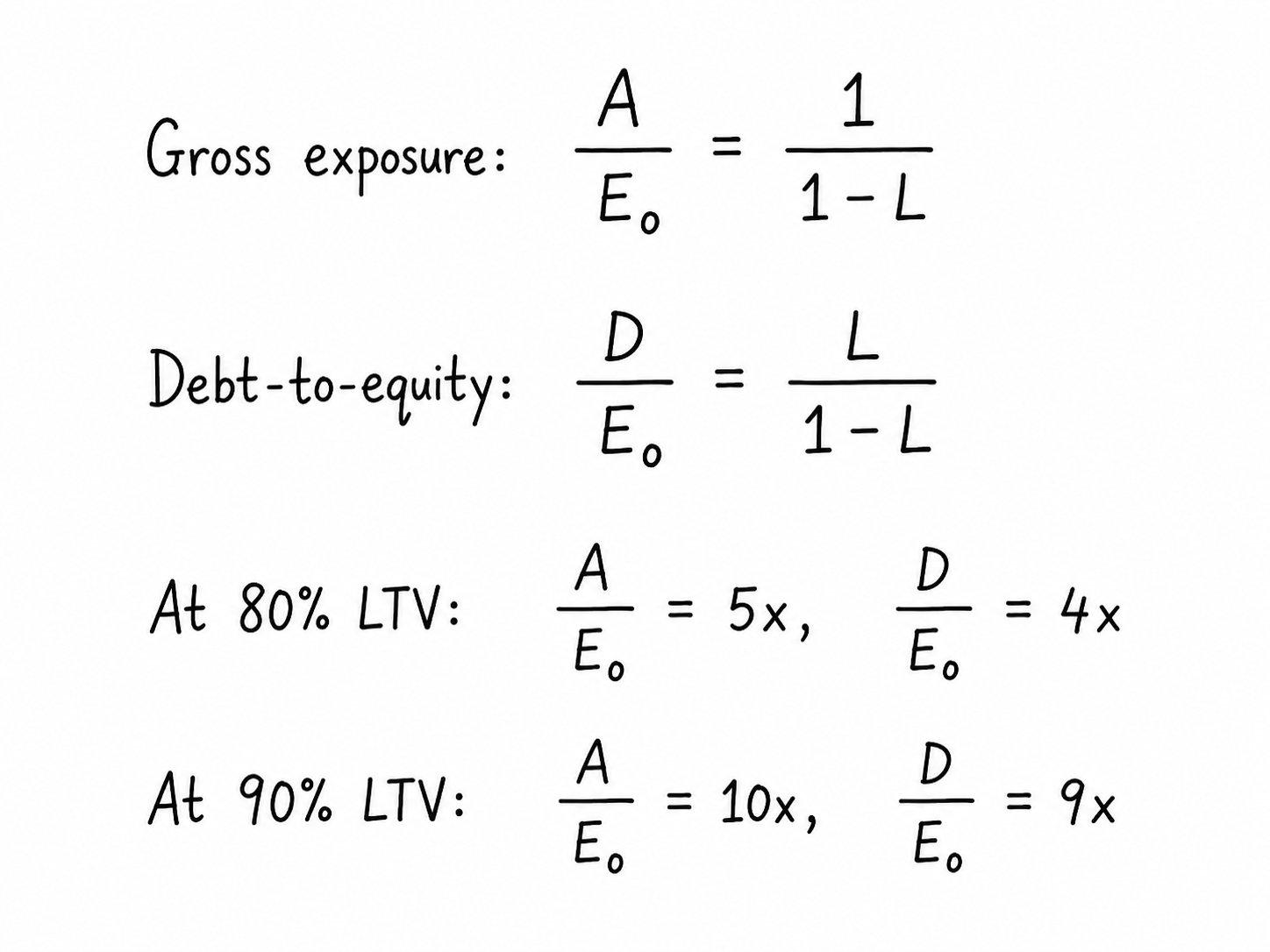
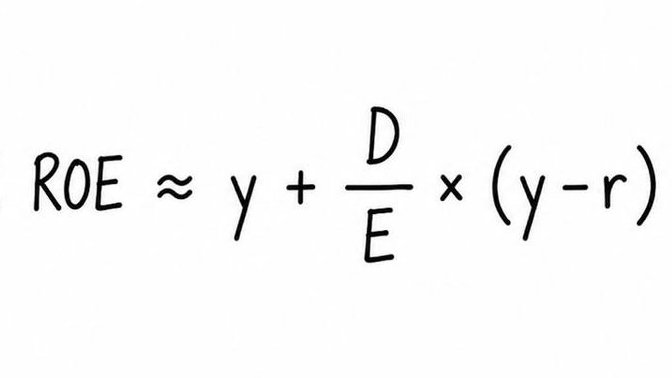
This is why looping exists. A small spread can become a real strategy once leverage is applied. If y is the asset yield, r is the borrow cost, D is debt and E is equity, then:
The issues with today's loops
The biggest issue is that most loops are funded with floating-rate debt. That is good protocol design for liquidity providers: Aave's interest-rate model, for example, uses a two-slope utilization curve where rates rise more sharply after the target utilization value. But for a borrower, this means the cost of leverage can change while the trade is open.
That turns a clean spread trade into a moving target. If the asset yield is 8% and the borrow cost is 4%, the loop works. If the yield drops to 5% and the borrow cost jumps to 9%, the same loop becomes negative carry. In July 2025, Blockworks reported that Aave ETH borrow rates moved from roughly 3% to over 18%, pushing stETH loopers into negative carry and triggering unwinds.
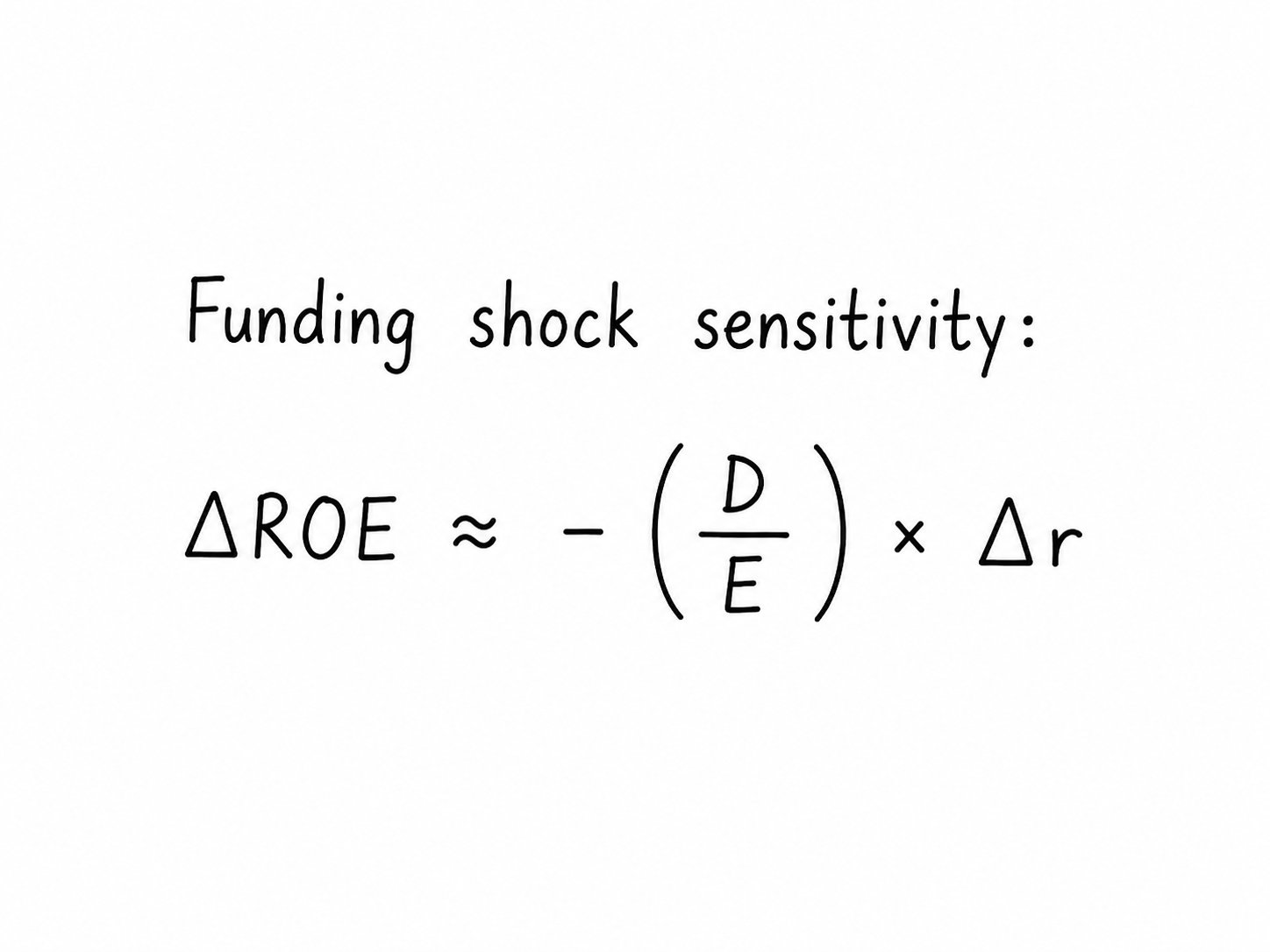
If D / E = 4x and the borrow rate rises by 5 percentage points, the annualized ROE hit is roughly −20 percentage points.
The risks
Looping is not dangerous because it is complex. It is dangerous because it stacks simple risks recursively.
The first layer is liquidation risk. A small move in collateral price can quickly become a health-factor problem.
The second layer is correlation risk. Most loops assume that two assets will move together: ETH and wstETH, stablecoin and stablecoin, PT and underlying, yield-bearing dollar and dollar. That assumption usually works, until it doesn't.
Then comes exit risk. The loop may be easy to enter, but much harder to unwind. Liquidity can thin out, slippage can rise, or everyone can rush for the same exit at the same time.
And finally, there is infrastructure risk: oracles, smart contracts, governance decisions and changing protocol parameters.
This is what makes looping fragile. The best loops attract capital, capital compresses the spread, utilization rises, borrow rates move, and suddenly the exit becomes a multiplayer game nobody wanted to play.
How fixed-rate fixed-term lending changes the game
Fixed-rate lending does not make looping risk-free. It does something more specific — it makes the liability side of the trade known. Users can model expected yield, fixed borrow cost, maturity, liquidation buffer, fees, slippage and unwind assumptions before entering the loop. FalconX reported that Pendle averaged about $5.7B TVL in 2025 and peaked around $13.4B, a sign that on-chain yield markets are already moving toward fixed-rate, fixed-term structure.
If fixed-rate fixed-term lending is the missing primitive, the next question is market design: how should this debt actually be created, priced and exited on-chain?
At Barter, we asked ourselves the same question. That is why we built BarterLend.
BarterLend is a fixed-rate, fixed-term money market where borrowers and lenders meet through an on-chain orderbook instead of accepting whatever a utilization curve gives them. Borrowers can lock their borrowing cost until maturity. Lenders can target a fixed return. Positions can be opened through primary markets and unwound through secondary market liquidity.
For loopers, this changes the game. The borrowing leg stops being an unknown variable and becomes a defined input. A user can enter a loop knowing the maturity, the fixed rate, the collateral parameters and the expected carry. It makes leverage easier to price, easier to manage and easier to bring to a broader class of users.
The better world ahead
Looping showed that DeFi seeks leverage. Floating-rate lending made that leverage easy to access. But floating-rate debt also made the cost of leverage unstable.
The next era of DeFi will not be defined by who can offer the highest floating APY over the last 6 hours. It will be defined by who can turn leverage into something users can actually price, hold and trust for months.
Loop with a fixed-rate borrow leg.
Drop your Telegram — we'll ping you the moment BarterLend opens.